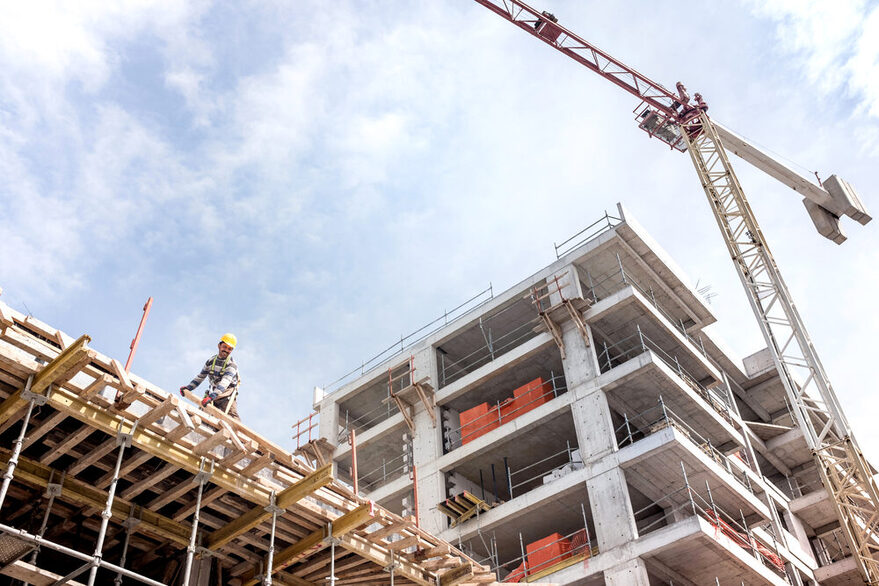
With the new "Act to Accelerate Housing Construction and Secure Housing", the federal government wants to lower the hurdles for housing construction - Stuttgart is now putting this into practice. The so-called construction turbo is intended to help create urgently needed living space more quickly. On October 21, 2025, the Building Law Office presented to the Committee for Urban Development and Technology (STA) how the state capital intends to apply the new instrument.
Temporary special regulations for residential construction projects
The aim is to facilitate construction projects more quickly without extensive plan amendment procedures. In future, municipalities will be able to deviate from the development plan in several comparable cases if the interests of neighbors and the environment are safeguarded. This is based on the new sections § 31 para. 3, § 34 para. 3b and § 246e BauGB. The latter - the actual "construction turbo" - allows temporary special regulations for residential construction projects until the end of 2030, even if these are partly outside the previous planning requirements.
In inner areas, certain areas are to be identified in which such exemptions are possible. For example, additional residential buildings in mixed-use areas, which have long since become predominantly residential areas, or redensification in small housing areas are conceivable. Abandoned church properties could also be used for apartments without the need for new development plans. The city administration is currently examining where such "potential areas" are located.
Making pragmatic use of new scope
But the limits are also clear: Neighbor protection, environmental protection and nature conservation still apply. In Stuttgart in particular, where many areas are subject to landscape or species protection, the construction turbo will only be applicable in isolated cases in outdoor areas. Every permit must undergo an environmental assessment - for example, on sealing, climate or species protection. Formal public participation is only planned if a project significantly changes the urban structure of a neighborhood.
The Department of Urban Development, Housing and the Environment (SWU) will report to the committee on which areas are being considered and what experiences have been made. This is how Stuttgart intends to use the new legal leeway - pragmatically, but with a sense of proportion. The construction turbo is not intended to be a free pass for construction projects, but a tool to create more apartments more quickly and in a more targeted manner.