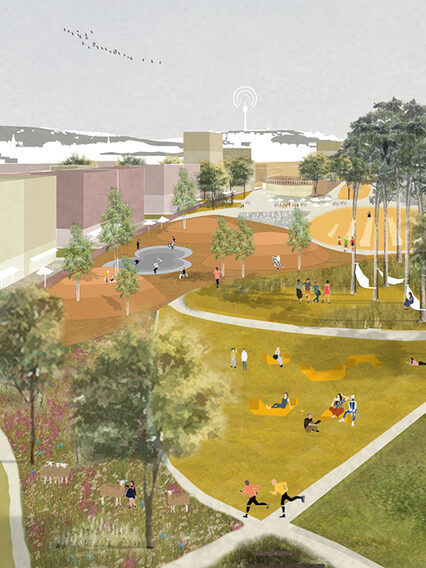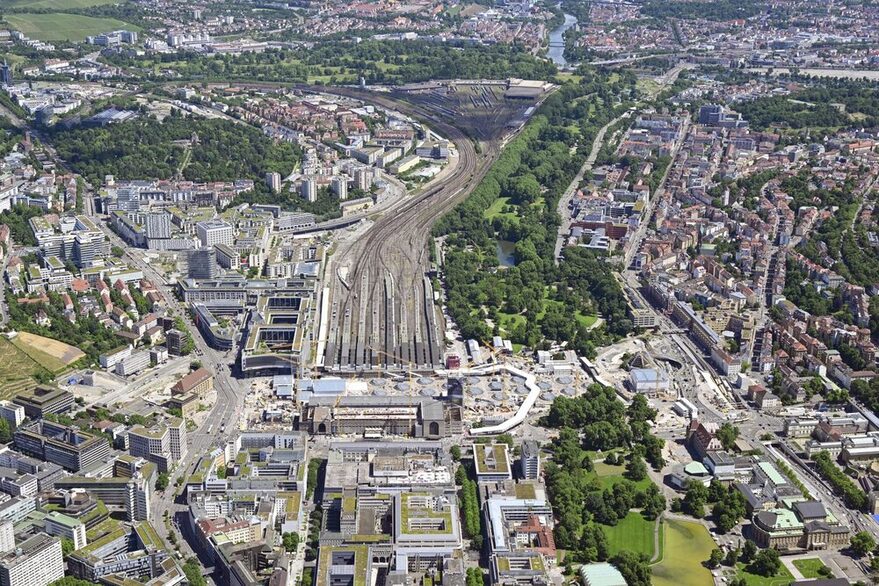
The Stuttgart Rosenstein urban development project continues to take shape. The city administration has now presented the current status to the Stuttgart 21/Rosenstein committee - with figures on costs and schedule. According to the figures, the administration expects to spend between 1.2 and 1.6 billion euros on planning, dismantling, site adaptation and development. This sum is to be spread over the next ten to twenty years.
Developing Stuttgart Rosenstein is a long-term investment for the state capital. It is a new district with around 10,000 inhabitants, which will be the size of a district such as Hedelfingen or Wangen. It is one of the largest urban expansion projects of the last 100 years.
Tax revenues will increase
Positive economic effects can be expected in the next decade and beyond. It is important that the city makes advance investments in order to gain new spaces and sources of income. Improving revenue or taking out loans should be considered for implementation, as considerable funds will be tied up annually for the development of the new districts. The city's tax revenues will also increase continuously. Once fully completed, the additional tax revenue could amount to around 35 million euros per year. At the same time, the project should create living space and strengthen the skilled trades, construction industry and culture.
Schedule
The administration is drawing up a framework schedule for further development with external experts. The focus is currently on dismantling the tracks, species protection measures, site design and logistical planning. The clearing and development measures are to begin swiftly after the complete opening of the new main station in mid-2027. The first construction measures could therefore begin in stages from the early 2030s, with overall completion scheduled for the early 2040s. Sub-area C2 is not expected to be developed until after that, as it is needed for construction logistics, including for the P option.
Costs
The first cost forecast comes from the consulting firm Drees & Sommer. The estimated EUR 1.2 to 1.6 billion includes planning, demolition, development, ancillary construction costs and a risk premium of around 33% - this takes into account possible price increases and unforeseeable costs.
In addition to the development costs, further expenses are incurred for the construction of apartments, schools, daycare centers, social and cultural facilities. Existing buildings such as the locomotive shed are also to be preserved and further developed. As there are still no precise plans for many of these projects, the city is currently expecting a further 1.4 to 3.8 billion euros in additional development costs. Development is already underway in sub-area C1 around the Wagenhallen: initial work on development and species protection is underway. The costs here, including risk items, are around 364 million euros. As the development will take many years, considerable upfront investment is required. The administration is examining various financing options, including revenue increases and loans.
Project management and outlook
To ensure that the Stuttgart Rosenstein project progresses efficiently, the city has set up a central management system. Technical, ecological and urban planning tasks are coordinated there. The digitalization of processes and close cooperation between the departments involved are important. Specialist knowledge from outside also flows in - for example through a commissioned multi-project management team for the Maker City (opens in a new tab) sub-project.
The city wants to further develop the project structure and the overall plan. The basis for this is the current cost forecast and the emerging framework schedule. The aim is to ensure reliable management and transparent control of the project.