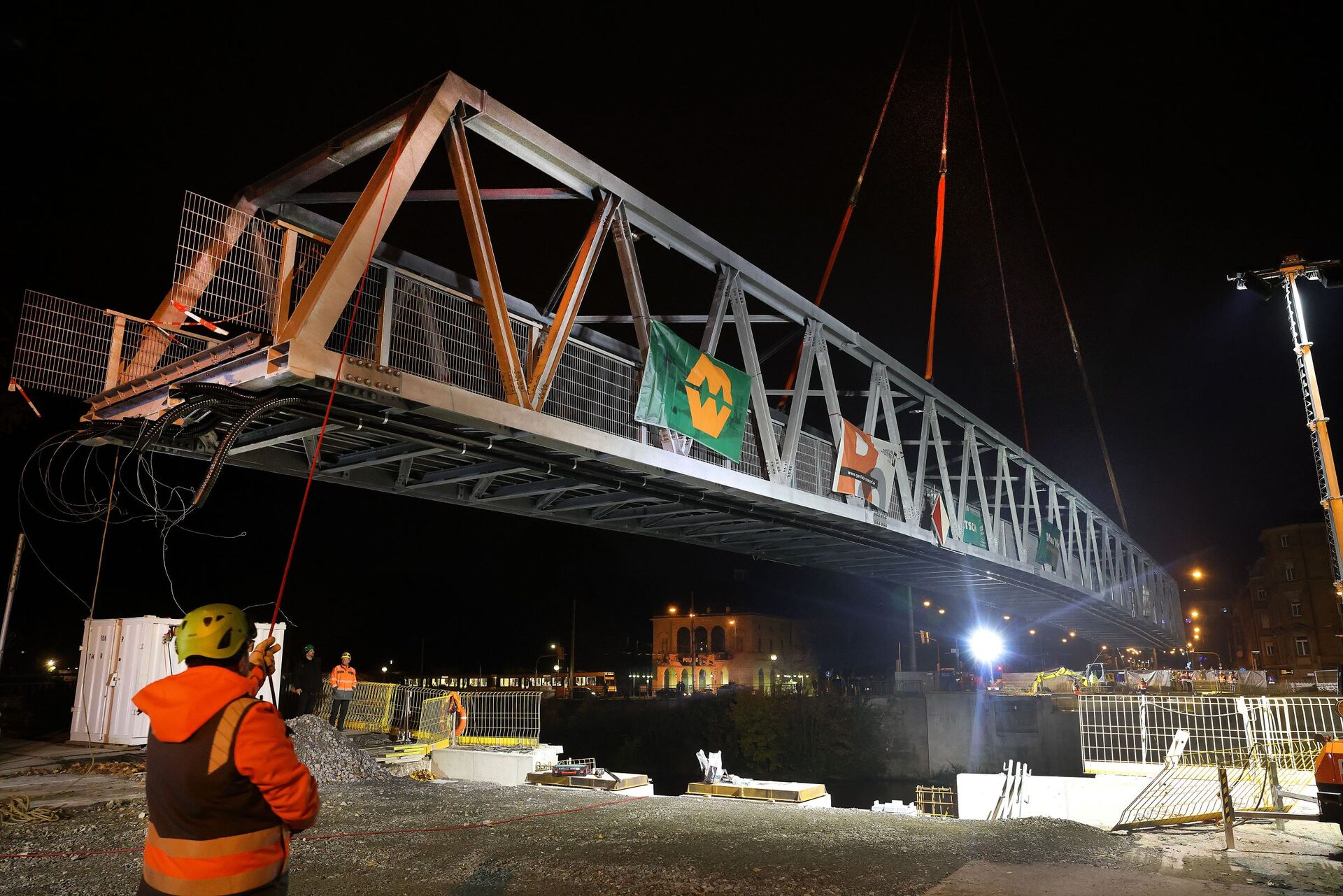
On Sunday evening, the new temporary bridge over the Neckar in Bad Cannstatt was brought into position. At around 9 p.m., the crawler crane weighing more than 1,000 tons lifted the 70-metre-long steel bridge weighing around 125 tons out of the transport ship. With the help of guide lines, it was rotated by 90 degrees and placed precisely on the prepared abutments by around 10.30 pm. The lift-in went smoothly and according to plan.
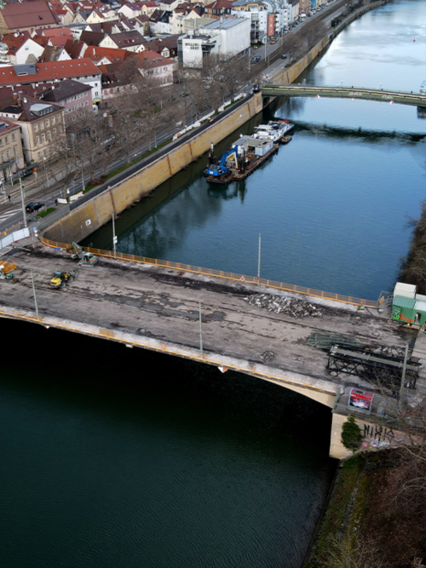
The temporary bridge thus re-establishes an important connection between Bad Cannstatt, Wilhelma, Rosensteinpark and the area around Pragstraße. It temporarily replaces the Rosenstein Bridge, which was demolished in July 2024. With a width of around 4.20 meters, it allows pedestrians and cyclists to cross the Neckar directly.
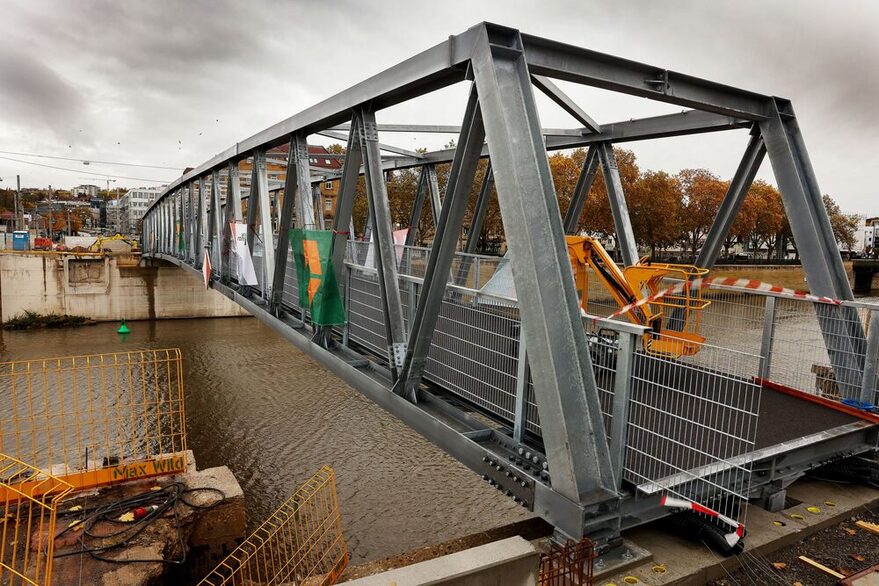
The truss bridge consists of bolted, hot-dip galvanized steel girders. The bridge deck consists of glass-fiber reinforced plastic panels (GRP planks), which are firmly mounted on the steel girders. In recent weeks, the construction was pre-assembled by the company Max Wild on the premises of the Kaatsch company in Plochingen.
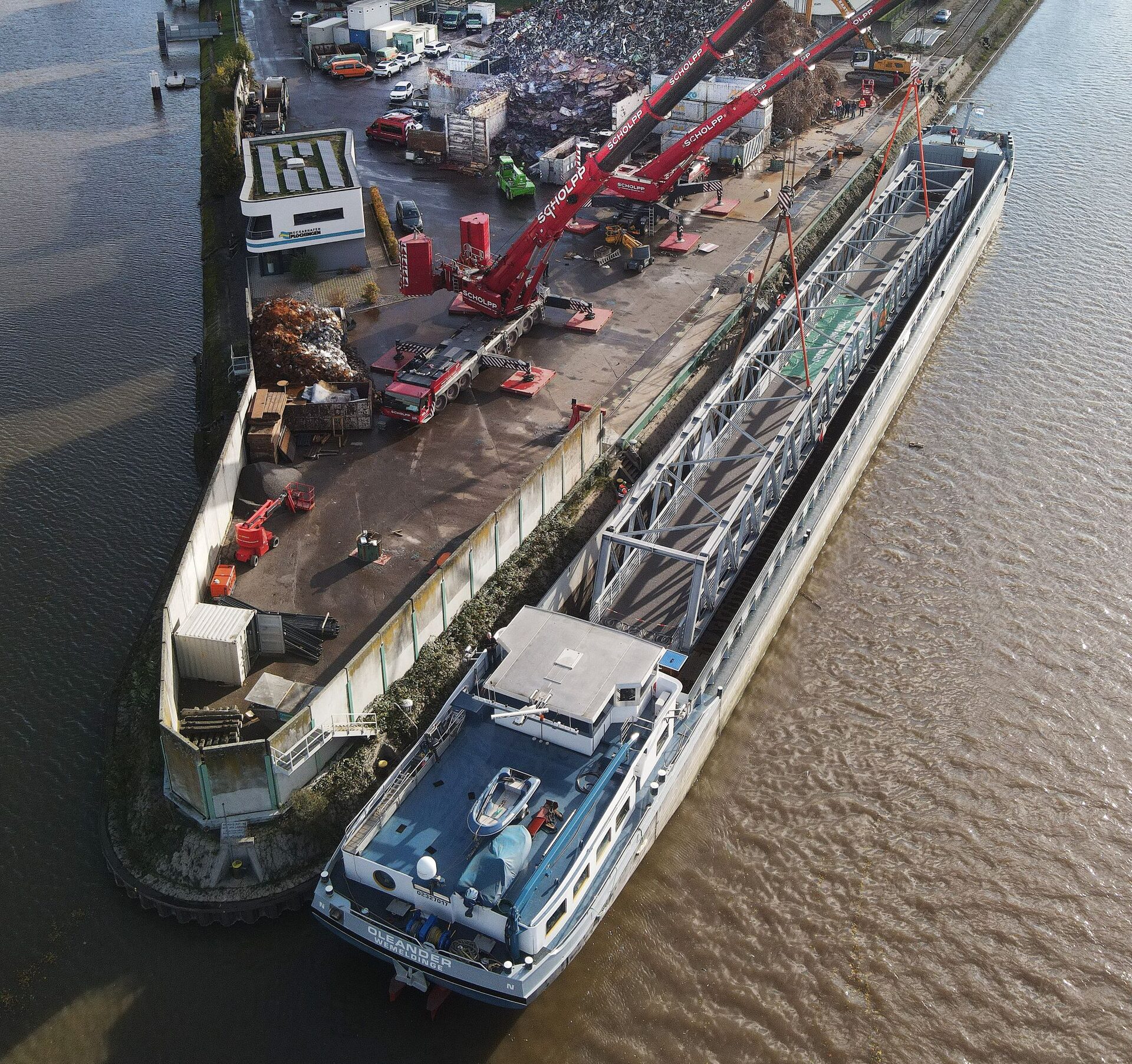
On Friday, October 24, the completed bridge was loaded onto the barge MS "Oleander" in the port of Plochingen with the help of two mobile cranes. The bridge was then transported along the Neckar to the Münster power station. From there, the ship brought the temporary bridge to Bad Cannstatt at around 8 p.m. on Sunday evening. On site, the transport ship was positioned in the Neckar navigation channel and stabilized with extendable supports.
In the coming days, the crawler crane will be dismantled and the ramps restored. The plan is to open the temporary bridge to pedestrian and cycle traffic in mid-November.
The work is being carried out by Max Wild GmbH from Berkheim on behalf of the state capital Stuttgart.