Metropolis with a past
Stuttgart has officially been the state capital of Baden-Württemberg since 1952, the year the state was founded. Today, Stuttgart is the center of a metropolitan region with over 2.7 million inhabitants, an important business and technology center, and a media location. Citizens from over 180 nations live in Stuttgart. A good 45 percent of the approximately 615,000 inhabitants have a migration background.
Explore city history
The history of Stuttgart's origins also bears witness to a variety of influences and historical developments, which are documented in the city's archives, museums and urban history institutions. The central institutions of Stuttgart's city history include the Stuttgart City Archives and the StadtPalais - Museum für Stuttgart (opens in a new tab).
Interesting insights into Stuttgart's history are also offered by the digital city encyclopedia Stuttgart (opens in a new tab), which was developed in cooperation between the city archive and the city surveyor's office. In an interactive map, information on historical buildings, events and personalities is conveyed and geographically located. The comparison of the current Stuttgart city map with old city maps also creates a bridge between past and present. Another digital excursion into the Stuttgart of yesterday is offered by the Historical City Map of the Stuttgart City Surveyor's Office.
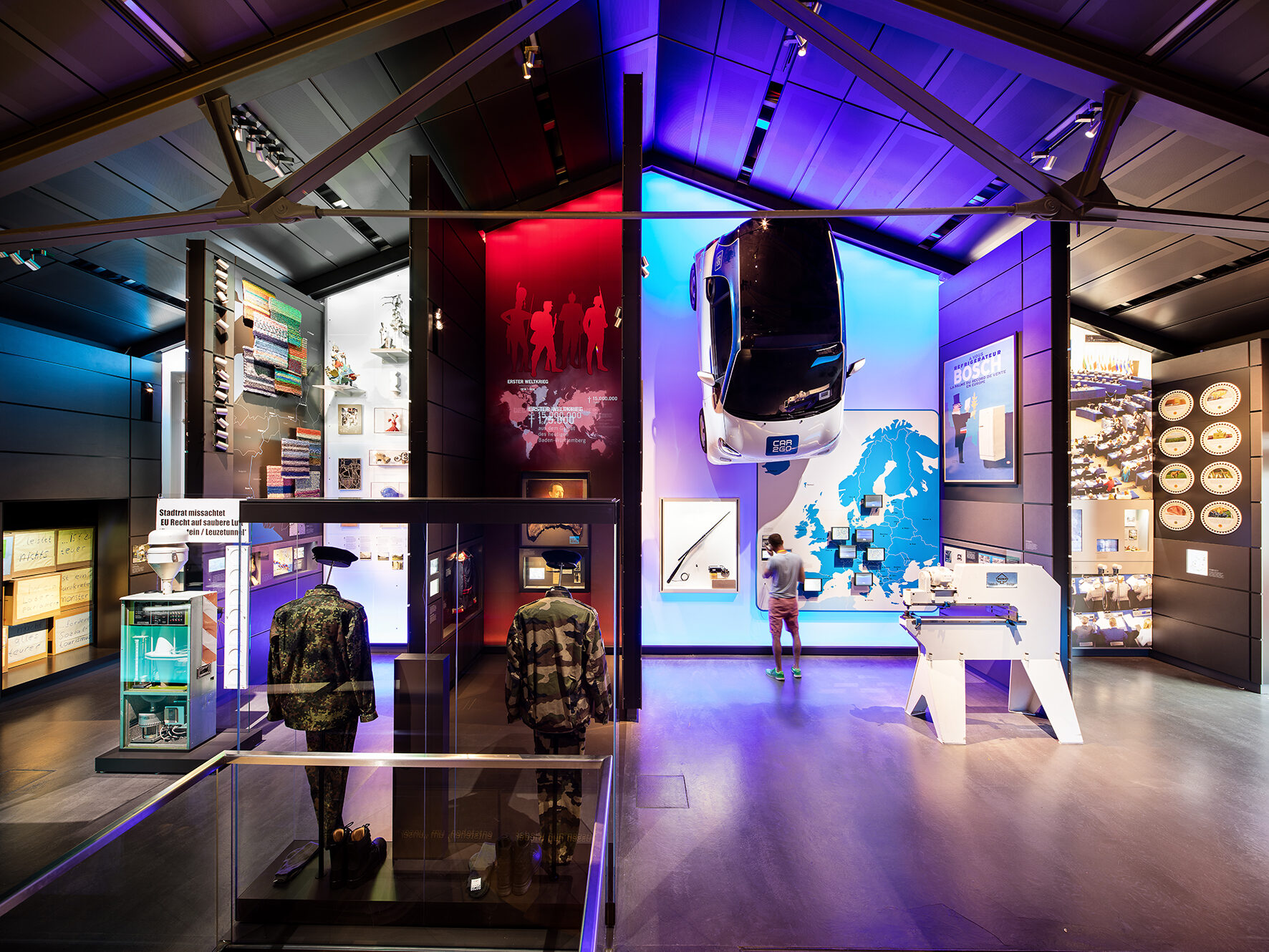
Anyone interested in Baden-Württemberg's state history will find the right place to explore and discover at the Haus der Geschichte Baden-Württemberg (opens in a new tab). And institutions such as the Museum Hotel Silber (opens in a new tab) or the Stolpersteine Stuttgart (opens in a new tab) initiative testify to the importance of historical sites as places of learning, remembrance and encounter. A selection of other institutions relevant to urban history can be found here.
Other facilities for the history of the city of Stuttgart
Experience city history
In many places, Stuttgart's history becomes tangible through memorials, sculptures, memorials and memorials. They tell of cultural achievements and personalities, of times of war and peace, of destruction and reconstruction. And they reflect how different generations have dealt with history over the course of time. The culture finder provides an overview of the memorials and monuments in Stuttgart.
Read city history
The fact that Stuttgart loves and lives diversity and has always met social challenges with innovation and determination is testified not least by its development from a small stud farm in the Nesenbach Valley to a multicultural metropolis in the heart of Baden-Württemberg. A short review of more than 1,000 years of Stuttgart can be found on the page Stuttgart Writes History.