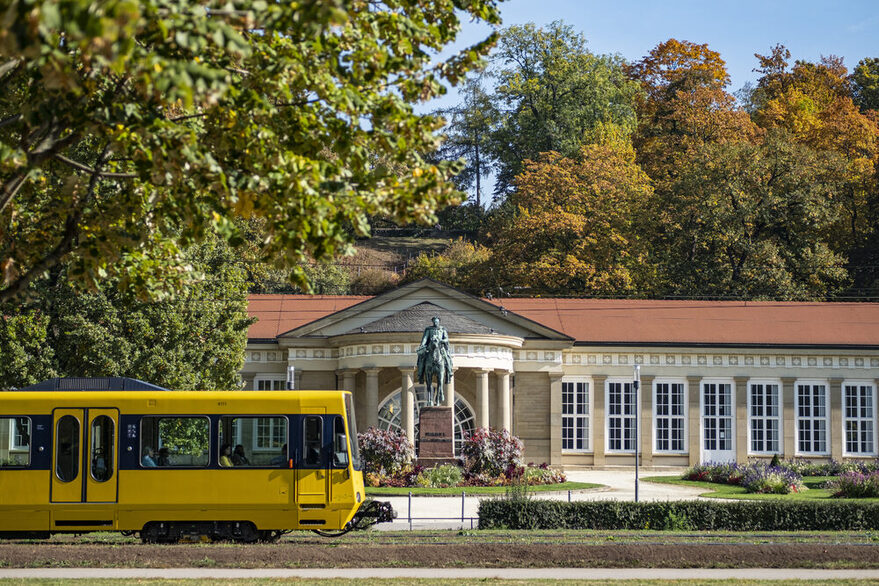
The lower part of the spa park was created at the beginning of the 19th century. In 1819, a pavilion was built over the Wilhelmsquelle spring, and in 1921 an avenue was laid out connecting the spring with the fashionable Wilhelmsbad Hotel. Planning for a Kursaal began in 1825, but it was not completed until 1841, after King Wilhelm I provided financial support for its construction. A large equestrian statue was erected in his honor, which today stands in front of the Kursaal and commemorates the monarch.
The upper part of the spa park was created only after the construction of the Kursaal. While the lower spa park with its magnificent avenue was laid out in the classicist style, the design of the upper spa park followed the naturalistic style of English landscape gardens. Instead of straight paths, winding paths wind through the park. Also worth seeing is the filigree pagoda that towers over the large play and sunbathing area.
The third part of the park dates back to 1960. The Wulfila complex is clearly structured and its functionally laid-out paths invite visitors to take a stroll.
On the trail of Gottlieb Daimler
Several highlights are hidden in the Bad Cannstatt spa gardens: State-approved healing water bubbles from the Lautenschläger Fountain in the Lower Kurpark, which was created by Jakob Clement in 1934. The Daimler Tower in the Upper Spa Garden is a listed observation tower that can be climbed on the Open Monument Day. And in the Gottlieb Daimler Memorial, a former garden house that belonged to the Daimler family villa, Gottlieb Daimler and Wilhelm Maybach developed the world's first high-speed engine in 1883.