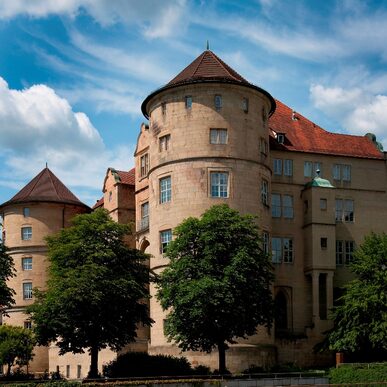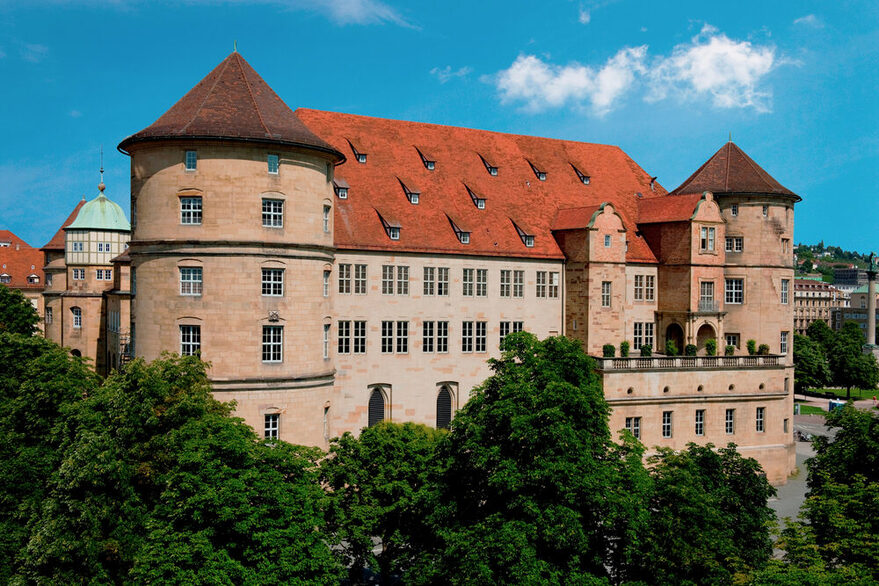
At first glance, the Old Palace looks more like a castle than a palace, and there is a reason for that: In the 10th century, Duke Liudolf of Swabia had a moated castle built on this site. It was intended to protect the "Stutengarten", an important stud farm at the time, from which the city of Stuttgart eventually developed. At that time, the moated castle did not yet serve as a residence.
The castle changed hands several times and was continually rebuilt and expanded. The most formative building phase took place in the 16th century: Under Duke Christoph von Württemberg, the old castle was remodeled into a representative, modern residence. The four-winged Renaissance castle with the characteristic large round towers that we know today was created. The arcades in the castle courtyard were also laid out during this period. Another highlight from this construction phase is the large equestrian staircase: the duke's guests could ride over it directly into the knights' hall.
Today, the castle houses the Württemberg State Museum with its rich holdings, the Junges Schloss children's museum and the castle church in the southwest wing. Visitors should not miss the memorial to the resistance fighter Claus Schenk Graf von Stauffenberg (opens in a new tab), which is well worth seeing. Its entrance is on the side of the castle facing Karlsplatz.