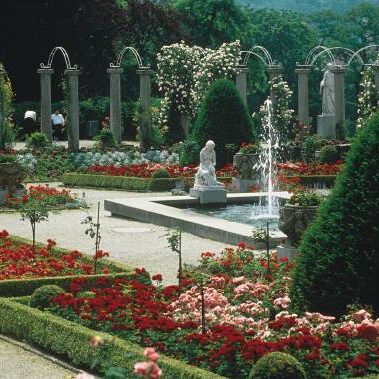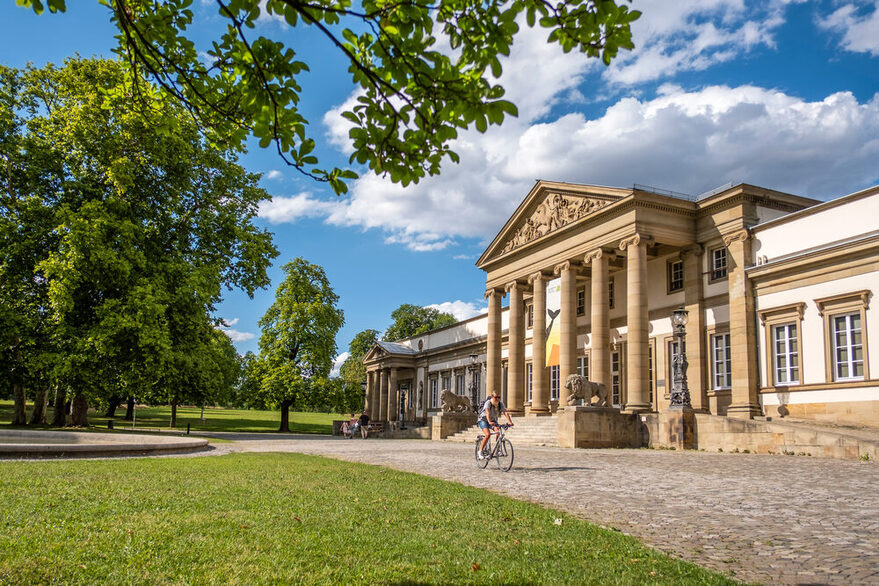
Rosenstein Park in Stuttgart is considered the largest English landscape park in southwestern Germany. It was designed by his court gardeners between 1824 and 1840 on behalf of King Wilhelm I of Württemberg. The location with its elevation is cleverly chosen: From the park, the view extends to the burial chapel on the Württemberg, the final resting place of the wife of the builder, who died young. The name Rosenstein, which was chosen for the park and the palace built there, also goes back to the deceased: roses were the favorite flowers of Queen Katharina.
Today, Rosenstein Park is a protected monument. On 100 hectares, visitors can stroll under native and exotic trees. The centuries-old trees and spacious lawns invite visitors to unpack their picnic blankets and take in the park at their leisure. The only place to get rowdy in Rosenstein Park is the large playground in front of the Museum am Löwentor, one of the two locations of the State Museum of Natural History. The second part of the exhibition is housed in Rosenstein Castle. Both parts deal with life on earth, from prehistoric times to the present day.
Rosenstein Park is connected to downtown Stuttgart via the palace garden. Together with the Leibfried Garden, the Villa Berg Park, the Wartberg and the Höhenpark Killesberg, these six parks form the "Green U" the "Green U", a green corridor eight kilometers long.