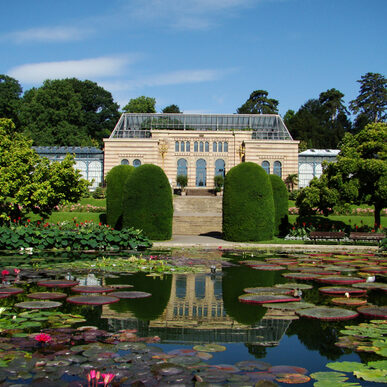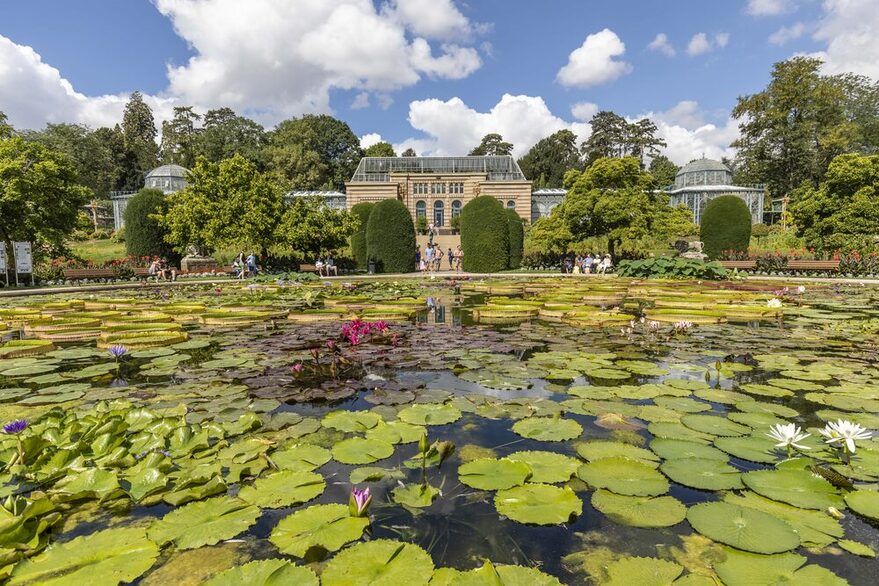
When King Wilhelm I had the idea of building a bathhouse below Rosenstein Palace at the beginning of the 19th century, Wilhelma was born. The plan for the bathhouse quickly grew into a pleasure garden with pavilions, walkways, lakes and a banqueting hall. Everything was designed in the Moorish style, bringing a touch of "1001 Nights" to the Neckar.
After the end of the monarchy, the royal pleasure garden was opened to the public as a botanical garden. However, the zoological history of Wilhelma only began after the Second World War with an aquarium show in 1949. Further exhibitions with living exhibits followed and after each show the wild animals remained at Wilhelma.
Historic park under monument protection
Today, Wilhelma is the only institution in Germany that combines a zoo and a botanical garden. With around 1,200 animal species, Wilhelma is one of the most species-rich zoos in the world. The plant population is impressive with more than 8,500 different species and varieties.
The 19th century park is also a protected cultural monument. And the Moorish-style buildings still exude a unique oriental flair. Wilhelma also has something special in store for lovers looking for a very special place to get married: couples can say "I do" in the oriental-romantic Damascene Hall.