Jump to content

State capital Stuttgart

Nature Conservation

Insect diversity

Insects are diverse, exciting and colorful - and an indispensable part of our ecosystem. However, thousands of insect species are now under threat, including the stag beetle and the Knautia sand bee. How can populations be better protected?

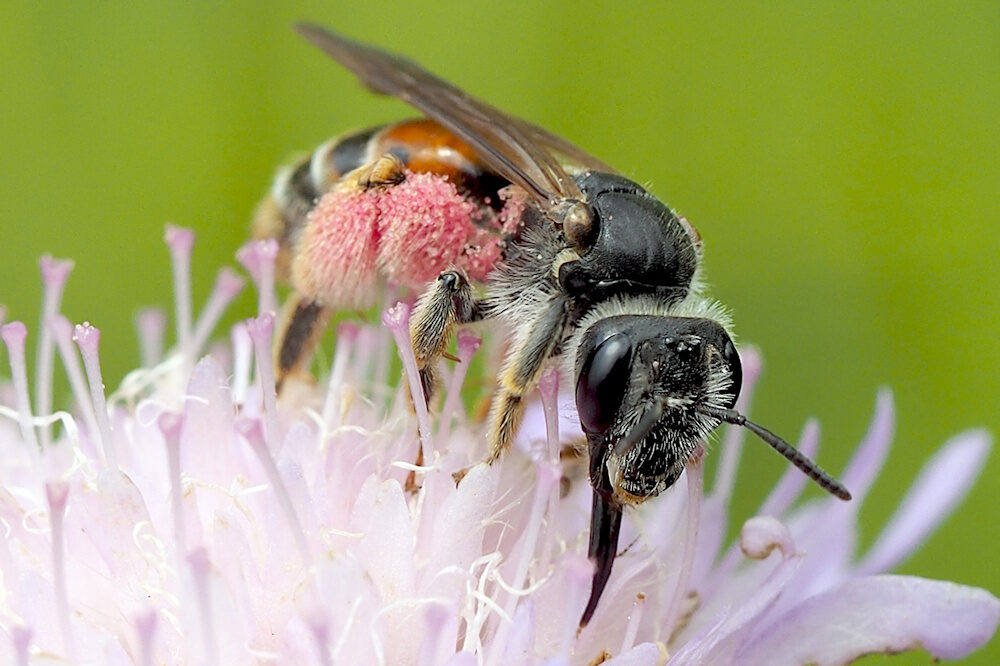
Knautia sand bee on a field widow flower: This wild bee species is dependent on pollen from the field widow flower and the dove scabious. Like all sand bees, it digs its nest in a sparse spot in the ground.
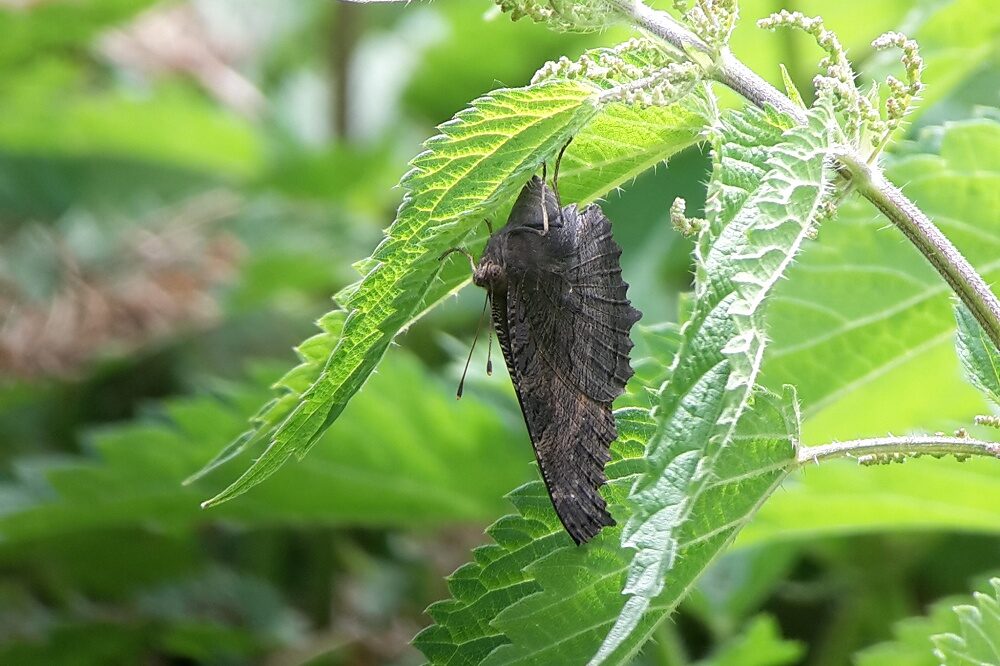
A peacock butterfly lays eggs under a nettle leaf. This butterfly is not picky when it comes to visiting flowers. However, its caterpillars only eat the leaves of the stinging nettle. The peacock butterfly overwinters as a butterfly in sheltered hiding places, even on buildings.
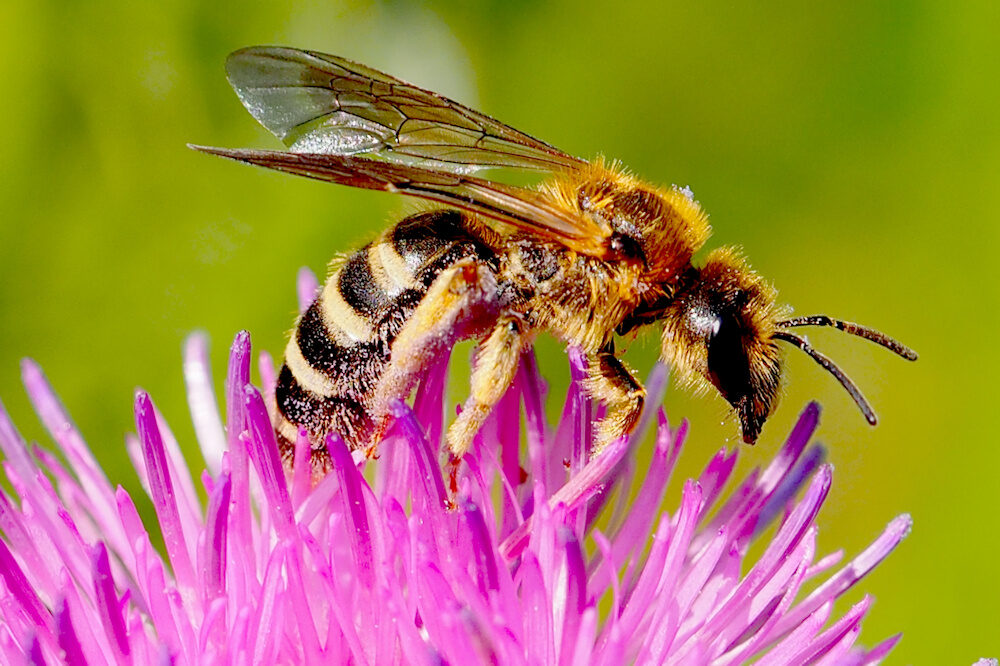
Yellow-banded furrow bee on knapweed: These furrow bees build their nests together in sandy soil and collect their food from composite flowers such as thistles.
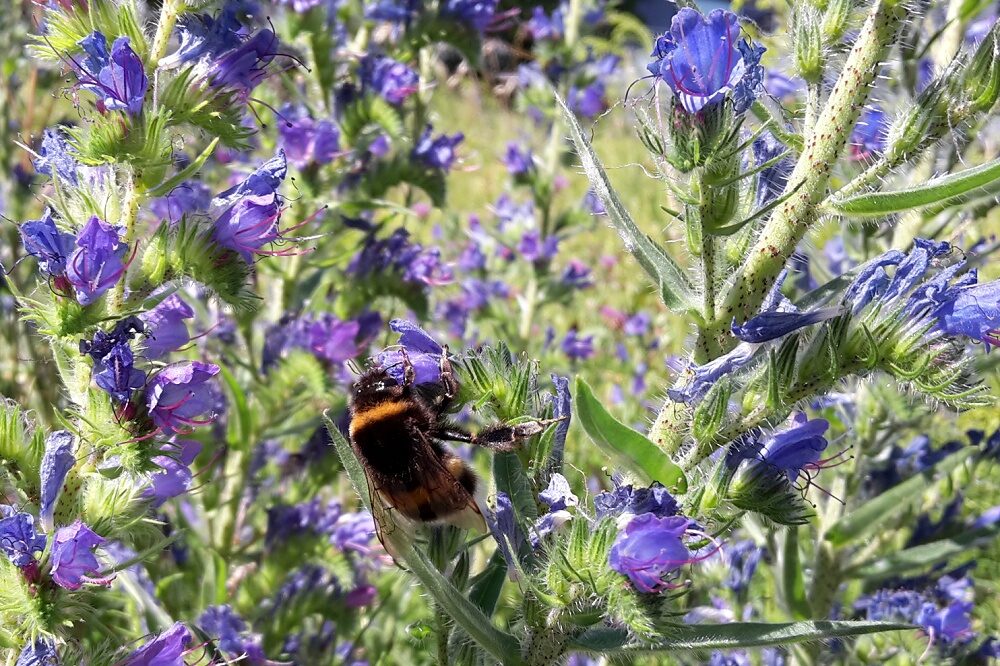
A dark ground bumblebee collects nectar from the common viper's bugloss. Bumblebees live "socially" and form a colony with a queen and workers. The nests are often built in existing holes in the ground. The queen warms her first brood and consumes a lot of sugar in the process. This is why nectar-rich flowers near the nest are particularly important.
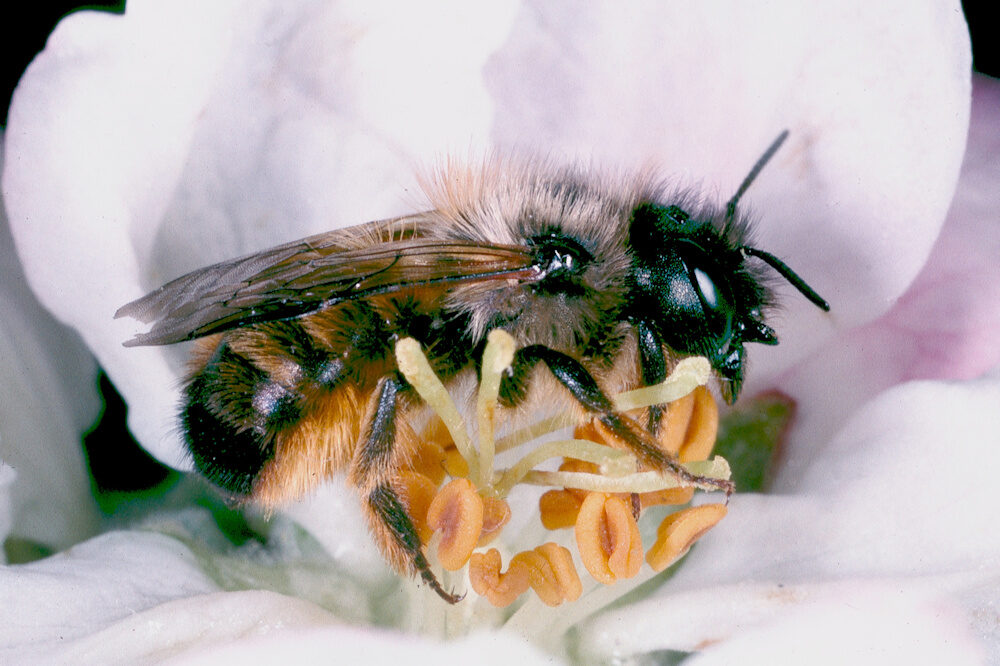
The red mason bee is a widespread species of wild bee. It also likes to use artificial nesting aids, tubular cavities with a diameter of 6 to 9 mm. The red mason bee collects pollen from various flowering plants.
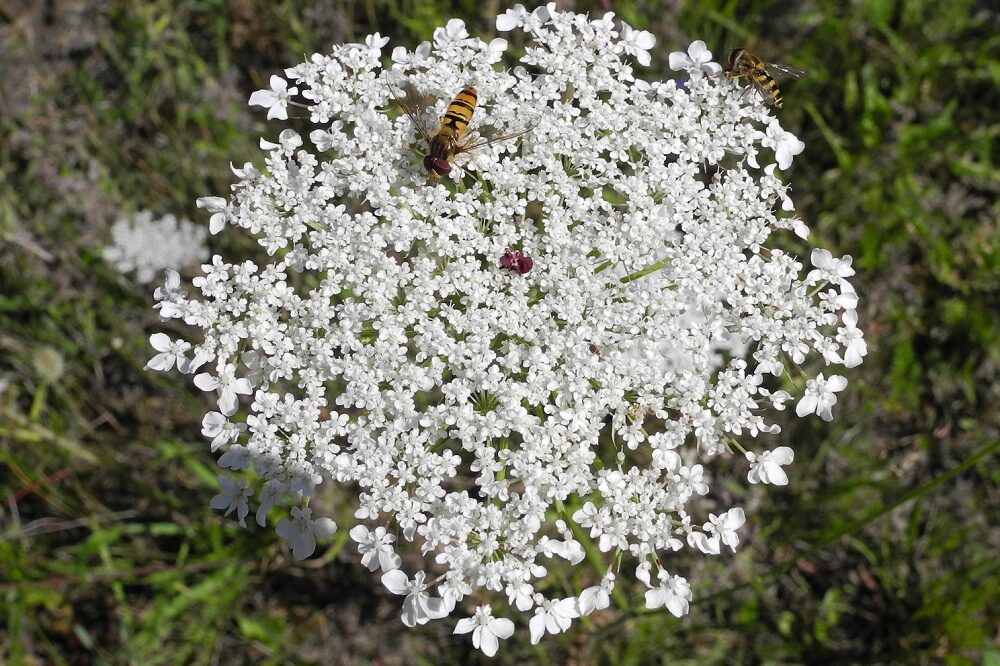
Hoverflies on wild carrot: Hoverflies feed on nectar and pollen and are among the most important pollinators. The larvae of some hoverfly species consume aphids and are therefore considered particularly useful. The wild carrot can be recognized by a single, dark purple flower in the middle of the umbel.
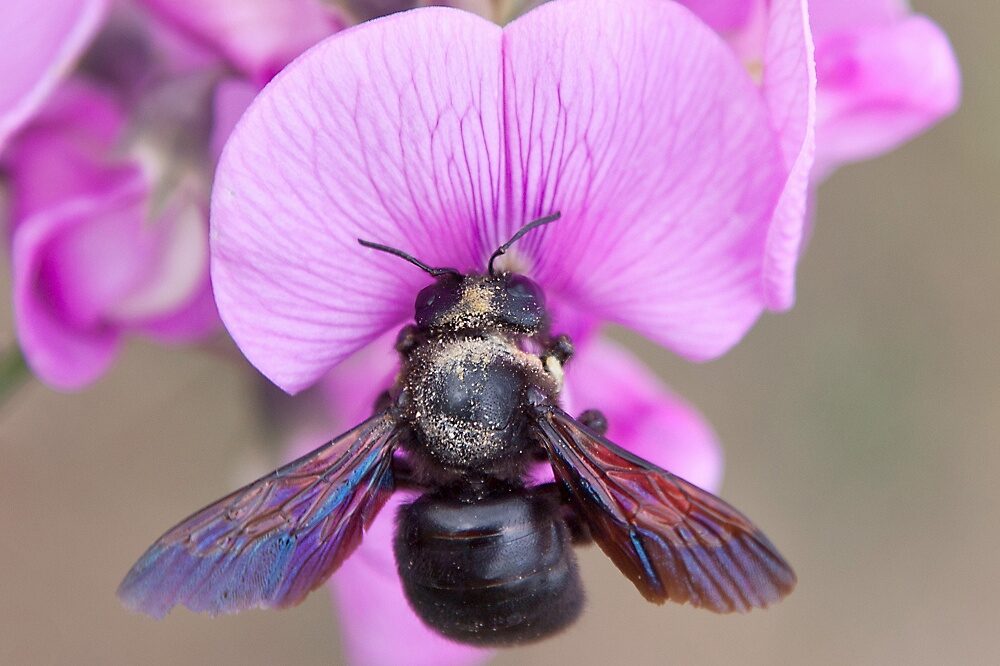
Blue-black wood bee on a sweet pea: This largest native bee species is very peaceful. Wood bees gnaw their brood tubes into dead, rotten wood, for example from old fruit trees.
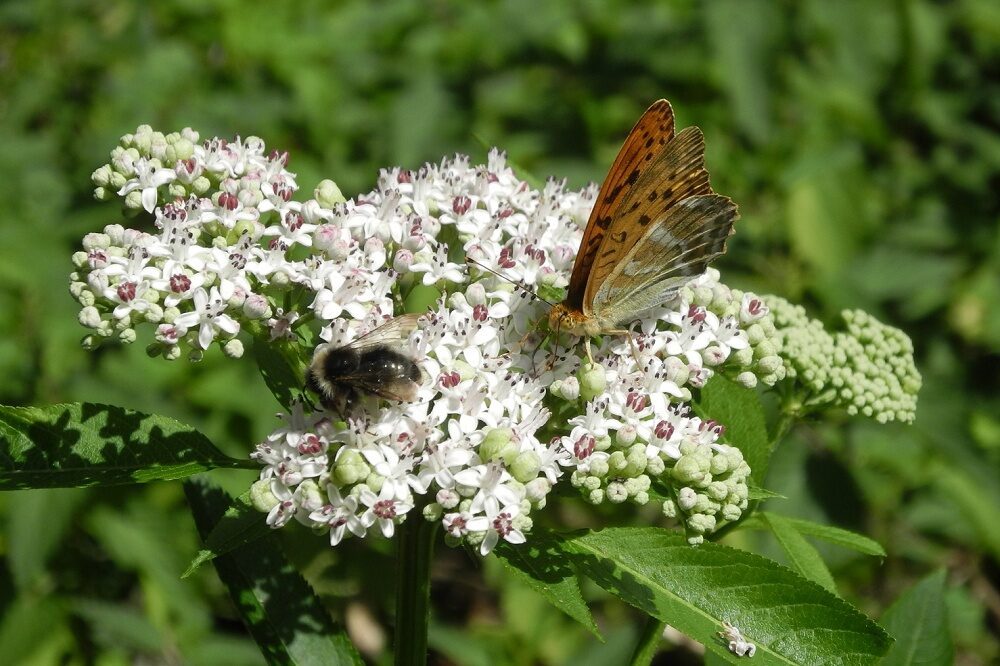
Emperor moth and wild bee on dwarf elderberry: This large butterfly feeds mainly on blackberry blossoms and thistles on flower-rich forest edges. However, the caterpillars, which are active from March onwards, need violet leaves as a food source. This is why the emperor moth lays its eggs on tree trunks where violets grow nearby.
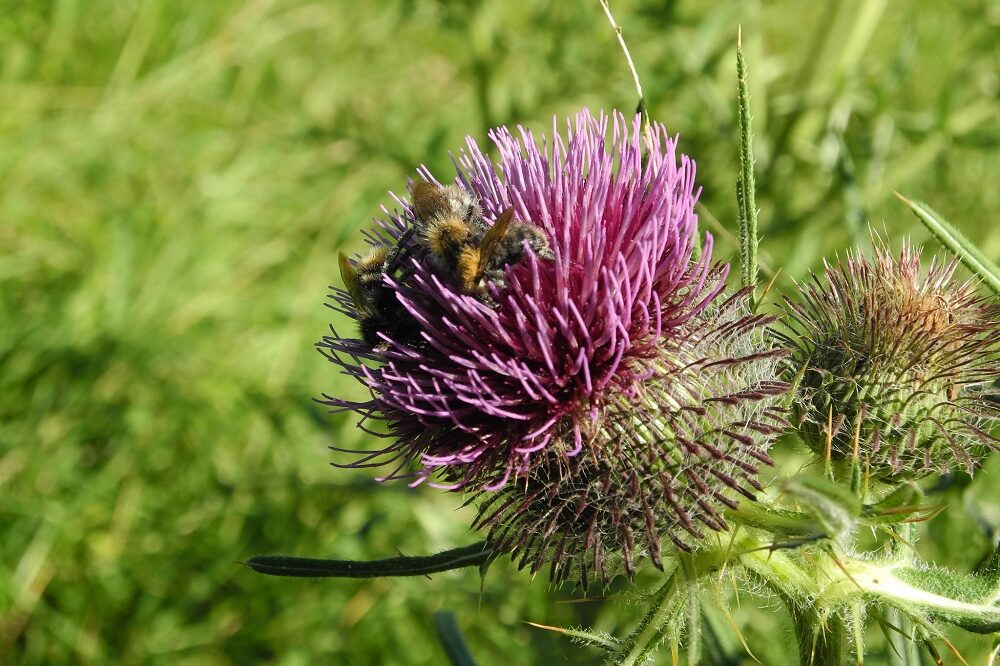
Wild bees on a thistle: Thistles are often valuable food plants for insects, but also for birds such as the goldfinch. The caterpillars of the thistle butterfly depend on the leaves of the thistle and protect themselves with a web.

Let it bloom - together for insect diversity

Insects pollinate many plants, ensure the nutrient cycle in nature by decomposing dead substances and are ultimately themselves food for other animals. Insects make up almost three quarters of all animal species in Germany. The Office for Environmental Protection draws attention to the topic of  species protection and has been offering an annual series of events together with other partners since 2019.

Environmental protection office

Environmental consulting and nature conservation

Symbol image organization contact

You might also be interested in

Explanations and information

Picture credits

  • Hans R. Schwenninger
  • Werner Rathgeb
  • Hans R. Schwenninger
  • Werner Rathgeb
  • Hans R. Schwenninger
  • Werner Rathgeb
  • Hans R. Schwenninger
  • Werner Rathgeb
  • Werner Rathgeb
  • Environmental protection office
  • GettyImages/Image Source
  • Garden, Cemetery and Forestry Office
  • Thomas Wagner/City of Stuttgart